
Demystifying Speaker Choices: Picking the Perfect Pair for Your Entertainment
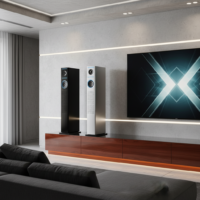
Ever found yourself staring at a wall of speakers, completely overwhelmed by jargon and endless options? You’re not alone! Many beginner audiophiles and home entertainment enthusiasts struggle with choosing the right speakers for their needs. This article will cut through the clutter and guide you through the process of selecting the perfect speakers to elevate your audio experience, whether you’re listening to music, watching movies, or diving into video games.
Understanding Your Audio Needs: It’s More Than Just Loudness
Before you even think about brands or prices, consider what you’ll primarily be using your speakers for. Are you a casual listener who enjoys background music while doing chores? Or are you a movie buff who craves immersive surround sound? Perhaps you’re a gamer who needs to pinpoint every enemy footstep. Understanding your primary use case will narrow down your options significantly. For instance, a small Bluetooth speaker is perfect for portability and casual listening, while a dedicated home theater system is essential for cinematic experiences. Don’t forget your room size – a huge speaker in a tiny apartment will sound boomy and overwhelming, while small speakers in a large open-plan living room will struggle to fill the space. Think about where the speakers will sit; do you have shelf space, or do you need floor-standing models?
Key Features to Look For: Sound Quality, Connectivity, and Ease of Use
Once you have a general idea of your needs, it’s time to dive into some core features. You don’t need to be an audio engineer to grasp these concepts. First, **sound quality** is paramount. While going into deep technical details isn’t necessary, look for terms like “clear highs,” “rich mids,” and “punchy bass.” Reading reviews from reputable sources often provides excellent descriptions of a speaker’s sound profile. For example, some speakers are known for their analytical sound, perfect for classical music, while others offer a warmer, more engaging sound suited for pop and rock. Try to listen to speakers in person if possible – your ears are the ultimate judge!
Second, **connectivity** is crucial. How will your speakers connect to your audio source? Most modern speakers offer a variety of options. Bluetooth is incredibly convenient for wireless streaming from your phone or tablet. For a more stable and higher-quality connection, look for aux inputs (standard 3.5mm jack), RCA inputs (red and white cables), or optical inputs, especially for connecting to TVs or dedicated audio receivers. If you’re building a home theater, you’ll need speakers that connect via speaker wire to an AV receiver. Some smart speakers also offer Wi-Fi connectivity, allowing for multi-room audio and integration with voice assistants like Alexa or Google Assistant.
Finally, consider **ease of use**. Are you comfortable with a complex setup, or do you prefer plug-and-play simplicity? Many bookshelf speakers require a separate amplifier, which adds an extra layer of complexity, albeit with superior sound. Powered speakers, on the other hand, have built-in amplifiers and are much easier to set up. For beginners, powered speakers or all-in-one systems are often a fantastic starting point. Think about remote controls, on-speaker controls, and companion apps – these all contribute to the overall user experience.
Two Practical Tips for Success: Auditioning and Positioning
Here are two actionable tips that can make a huge difference in your speaker buying journey and post-purchase enjoyment. Firstly, **audition speakers whenever possible**. Just like you wouldn’t buy shoes without trying them on, you shouldn’t buy speakers without listening to them. Bring your favorite music or a clip from a movie to a store and ask to hear different models. Pay attention to how instruments sound, how vocals are reproduced, and if the bass is overwhelming or just right. What sounds good to one person might not be appealing to another, so trust your ears. Secondly, **speaker positioning matters significantly**. Even the best speakers can sound subpar if they’re placed incorrectly. Try to keep speakers equidistant from your listening position and avoid placing them directly in corners, which can boost bass frequencies unnaturally. Experiment with toe-in (angling the speakers slightly inwards towards your listening spot) to find the sweetest sound. A few inches can dramatically alter the soundstage and overall clarity.
Choosing the right speakers doesn’t have to be intimidating. By understanding your needs, focusing on key features like sound quality, connectivity, and ease of use, and applying practical tips like auditioning and proper positioning, you’ll be well on your way to enjoying a truly immersive and satisfying audio experience. Happy listening!







 For more than thirty years, I’ve been trying to turn on lights, inspire people and teach them how to level up in photography. This blog has been appearing daily for more than a decade. One day, if we meet, I hope you’ll share with me your favorite posts. Even better, I’d like to hear about how a book or course helped you interact with the world differently and make a difference.